
Sector service
Vacant property security
Protecting empty commercial and residential property across London and the Home Counties against occupation, stripping and the damage that voids cause on their own.
An empty building advertises itself. Accumulating post, dark windows, no vehicles and an untended garden are all readable from the street, and they say the same thing: nobody will notice for a while.
Two things then follow. The obvious one is unauthorised occupation or stripping of anything with a scrap value, particularly copper, lead and fittings. The less obvious one is that a void building damages itself: a burst pipe, a failed heating system in January, or water ingress through a slipped tile will cost more than most break-ins and will not trip any alarm.
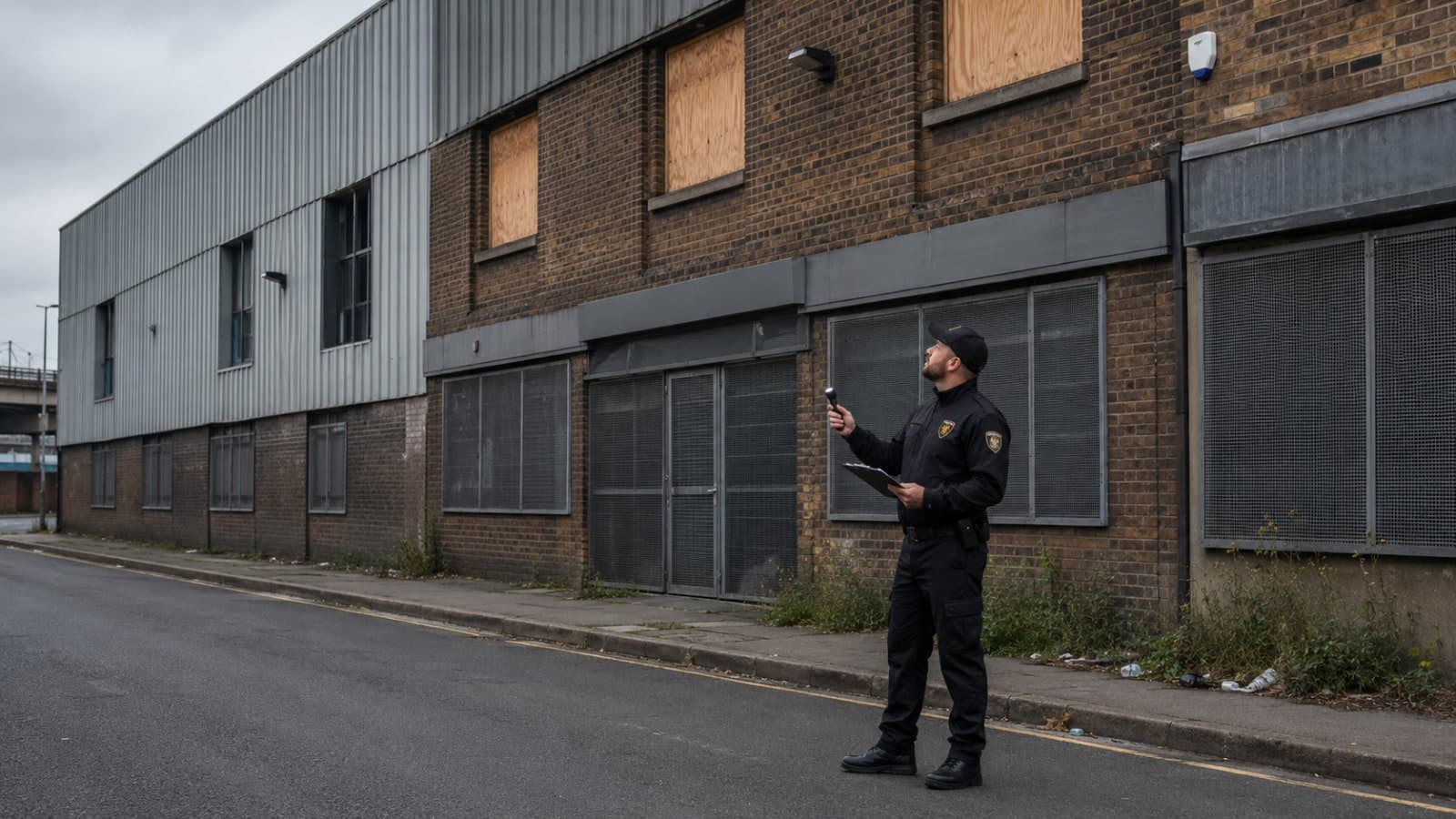
Occupation is the deterrent
What deters people from an empty building is evidence that somebody is attending it. Scheduled patrols with a genuine presence, combined with key holding so that someone can attend an activation quickly, work considerably better than a monthly drive-past that anybody watching can predict.
For higher-risk stock, particularly commercial property in areas with a history of occupation, overnight cover is warranted. A dog unit is often the most economical way to provide it, because one team can hold a large or multi-floor building that would otherwise need several officers.
Squatting, and why speed matters
Removing people from a commercial property once they are in is slow, expensive and largely a civil matter. Preventing entry is neither. The economics of vacant property security are almost entirely about how early you intervene.
That is also why we report insecurities rather than only intrusions. A door left on the latch by a contractor, a window catch that no longer seats, or a rear gate that has been quietly unbolted are all the beginning of the same problem, and all cheap to fix at that stage.
Condition reporting, not just security
Our property checks report on the things that turn a void into an insurance claim: water ingress, heating failure in winter, accumulating mail signalling the building is empty, evidence of attempted entry, and any fire-safety issue such as a wedged door.
Most void insurance policies carry conditions about inspection frequency and about the property being secured and drained down. A written record of scheduled attendance is what demonstrates you met them. Without it, a claim can fail on the paperwork rather than on the facts.
Contractor access while the property is empty
Empty buildings still need trades in and out for maintenance, surveys and refurbishment. We hold the keys and manage that access, logged against the individual and the job, so nobody needs to attend to let somebody in.
That log matters more than it sounds. When something is damaged or missing and the question of who was on site becomes contested, an access record settles it.
Sectors we provide this for
- Commercial voids
- Floors and units between tenancies, where occupation is the main risk.
- Residential stock
- Property awaiting sale, refurbishment or demolition.
- Period and listed buildings
- Lead, copper and original fittings worth stripping, with disproportionate damage caused getting to them.
- Development land
- Sites awaiting planning, sometimes for years, with no occupied neighbours.
- Managed portfolios
- Void schedules with insurance inspection conditions to satisfy.
- Post-incident
- Property left insecure after a break-in, pending permanent repair.
Patrols, occupation or physical security: what actually protects a void?
There are three ways to protect an empty building and they cost very different amounts. The right answer depends almost entirely on how attractive the building is and how long it will stand empty.
Scheduled patrols with key holding fit when
the building is low to moderate risk and will be empty for a defined period. You get attendance, condition reporting and a response to activations, at a fraction of continuous cover.
Overnight or continuous cover fits when
the building has a history of occupation, sits in an area where that is common, or holds strippable value. Once people are in a commercial property, removal is slow and civil, so prevention is far cheaper than reversal.
Physical measures alone fit when
the void will be long and unattended: steel screens and alarms have no ongoing labour cost. But they deter rather than detect, and they do not tell you about a burst pipe.
For most voids the economical answer is physical security plus scheduled attendance, because the damage that actually generates claims is often water and weather rather than intrusion. If the building has been occupied before, skip straight to continuous cover.
Areas we cover for vacant property security
We work across London, Hertfordshire, Bedfordshire and Buckinghamshire. These are the areas with a dedicated page, and there is local detail on each rather than the same text with the place name changed.
A void building damages itself. A failed heating system in January will cost more than most break-ins, and it will not trip a single alarm.
Typical deployments
- Commercial property standing empty between tenancies
- Residential stock awaiting sale, refurbishment or demolition
- Buildings at risk of unauthorised occupation or metal theft
- Void portfolios needing scheduled inspection for insurance conditions
- Property left insecure after a break-in, pending permanent repair
- Sites awaiting planning or development, sometimes for years
Compliance
Key holding, patrols and alarm response are carried out by SIA-licensed personnel. Keys are held by coded reference rather than by property address, and every movement is logged and auditable for insurance purposes.
Tell us about the site
Send us the property, the hours you need covered and anything that has already happened there. We will come back with a survey date and an honest view of what the site actually needs.